
Pinehurst Services Limited organises congresses, trade exhibitions and corporate business events across the UK.
Planning process
The event planning process, step by step
Eight stages from brief to debrief, and what happens at each one.
Why the early decisions matter
Most event problems trace back to a decision made early and never revisited. A venue chosen before the floor plan was drawn. A programme built without checking changeover time. A sponsor package sold against a space that turned out to be a corridor.
This page sets out how Pinehurst Services Limited plans and delivers a congress, trade exhibition or corporate event, and what to expect at each stage. The stages below run in order, but the scope is agreed with you at the brief, so nothing is fixed until you say it is.
What a brief has to settle first
Event type and purpose, audience, delegate or visitor numbers, date window, location preference, budget frame and any hard constraint that cannot move. Everything else stays open until you close it.

Stage one: the brief
The brief captures what is fixed and what is open. Event type and purpose, audience, approximate delegate or visitor numbers, date or date window, location preference, budget frame, and any hard constraints.
Hard constraints are the useful part. A sponsor commitment, an annual general meeting that has to sit inside the programme, a keynote speaker only available on one day. Pinehurst Services works from those anchors and treats everything else as adjustable.
Stage two: venue sourcing
With the brief in hand, the venue search begins against the real requirements: capacity by layout, date availability, transport access, catering, accessibility, and hybrid capability if needed.
What you receive
A shortlist with a written comparison. Two to four venues is typical, because most options fall away on a single hard requirement. The comparison sets out the trade-offs so the committee or board can make an informed choice rather than picking from a stack of brochures.
Stage three: site inspection
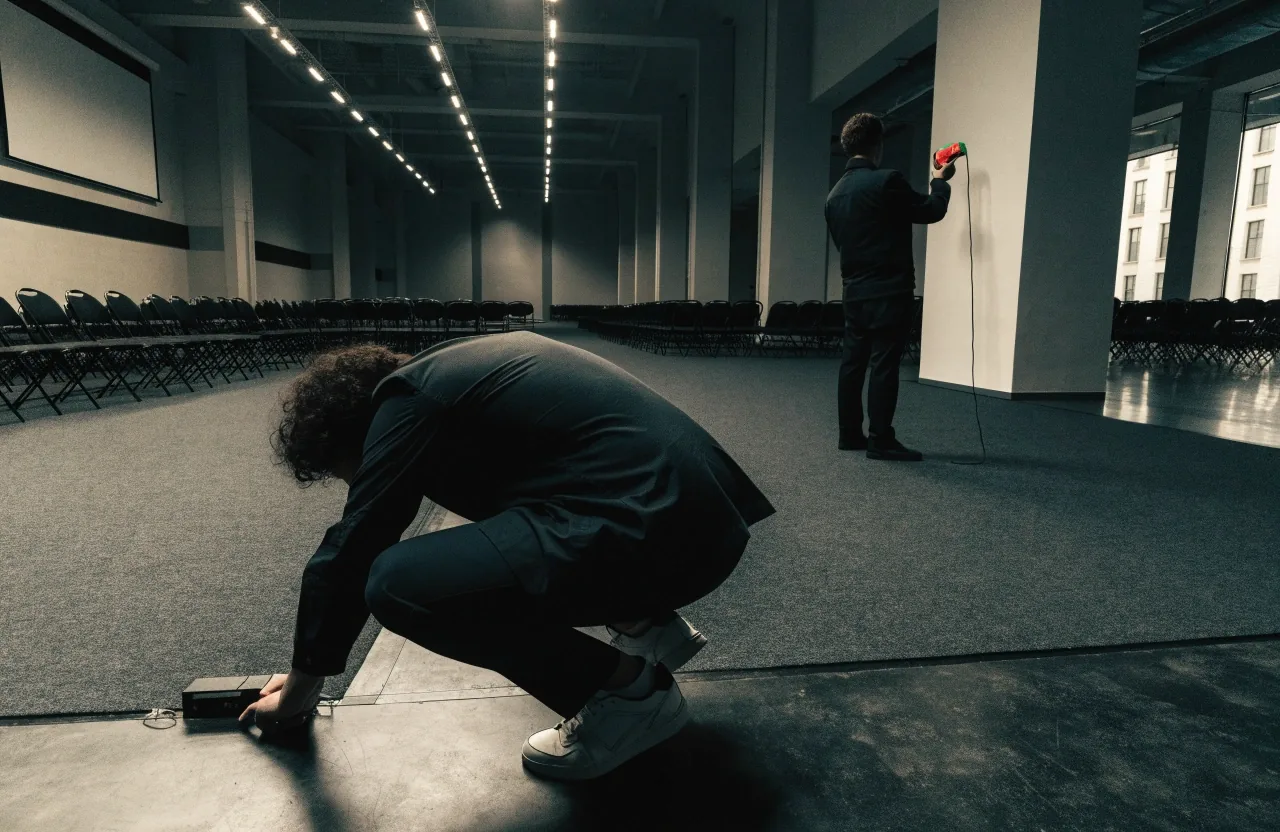
An inspection is a working visit, not a viewing. Room dimensions, ceiling heights, door widths, load-in access, floor loading, power, stage sightlines, audio coverage, kitchen capacity and accessible routes all get checked and recorded.
Photographs and measurements go into the file. For hybrid events, the inspection also covers camera positions, lighting and internet resilience. Findings feed directly into the floor plan.
Stage four: floor plan and layout
Registration and circulation
Badge collection points, the route from the door to the main room, and the paths that keep delegates out of each other's way during breaks.
Rooms and configurations
Main room layout, breakout configurations, exhibition or sponsor space and catering points, all drawn against the programme rather than the brochure.
Where capacity gets tested
A room that seats 500 in theatre style may hold 250 for a dinner, and neither number tells you whether the coffee break will work. The plan answers the operational questions.
The floor plan turns the venue into a working event. It is also the document your committee, your sponsor contacts and your suppliers all read from, so it stays live from first draft to load-out.
Stage five: suppliers and technical production
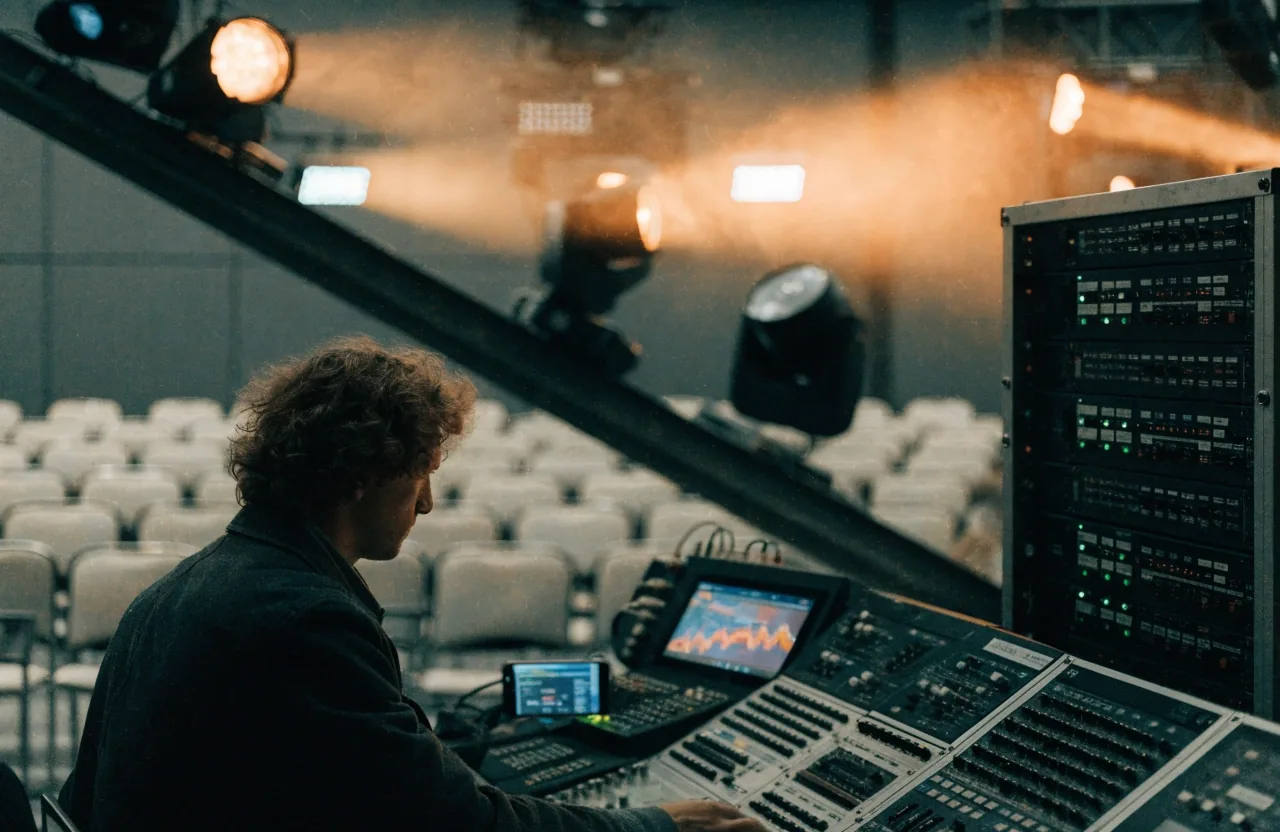
Staging, screens, audio, lighting, power distribution and any streaming setup are coordinated with the venue and the production supplier. Catering, furniture, signage and accessibility provisions are confirmed in the same window.
Pinehurst Services holds the supplier schedule so the client is not mediating between three contractors. Rehearsal time is booked before doors open, particularly for events with a scripted running order.
Stage six: registration and delegate communications
Registration flow is planned alongside the venue layout. Where delegates arrive, how badges are collected, what signage they see first, and how they find the main room.
What delegates are told
Travel and station guidance, parking, accessibility, catering and the programme, sent before the day rather than handed over at the desk. Getting this right reduces the volume of on-the-day questions and the queue at the registration desk.
Stage seven: on-site delivery
The event week runs to a schedule. Build and set-up, supplier arrivals, rehearsals, the event itself, and the load-out. Pinehurst Services holds a running order for the day and a named contact on site for the client, the venue and the suppliers.
Issues get resolved on the floor rather than escalated to a committee meeting. That is the point of having an organiser on site rather than a coordinator on the phone.

Stage eight: the post-event debrief
The debrief is a short written review produced after the event. What ran to plan, what did not, how the venue performed, where delegate flow worked, and what to change next time.
What the debrief covers
- Session timings and changeover
- Delegate flow and registration queue
- Venue performance and catering
- Technical issues and exhibitor feedback
- Attendance patterns for the next edition
For recurring events, this document becomes the starting point for the next cycle, so the next edition is planned from evidence rather than memory.
Timelines: how long each stage takes
For a major UK congress or exhibition, the practical window is 12 to 18 months from brief to delivery, particularly if a specific London venue is required in a peak month. Corporate conferences and smaller meetings often run in three to six months.
The venue search is usually the longest single stage. Speaker availability, sponsor cycles and delegate travel budgets set their own timelines, which is why starting early gives more room to compare rather than accept.
Major congress or exhibition
12 to 18 months from brief to delivery, more if a specific London venue is needed in a peak month.
Corporate conference or smaller meeting
Often three to six months, depending on venue availability and how much the dates can move.
Where the process flexes
Not every client needs all eight stages. Some arrive with a venue already booked and need the floor plan, supplier coordination and on-site delivery. Others need venue sourcing and inspection only, then take the plan back to their own team.
The process is a framework, not a fixed package. The scope gets agreed at the brief stage, and the client keeps control of the programme and the brand throughout. If your event spans a congress, a trade exhibition and a corporate programme in one week, the same stages run in parallel rather than one after another.
Related services
Questions we get asked before the brief
How long does the whole process take?
For a major congress or trade exhibition, 12 to 18 months from brief to delivery is realistic. Corporate conferences and smaller meetings often run in three to six months, depending on venue availability and date flexibility.
Can we join the process partway through?
Yes. Some clients come with a venue already booked and need floor planning, supplier coordination and on-site delivery. Others need venue sourcing and inspection only. The scope is agreed at the brief stage.
What does the post-event debrief cover?
Session timings, delegate flow, venue performance, catering, technical issues, exhibitor feedback and attendance patterns. For recurring events it becomes the starting document for the next cycle.
Who you are talking to
Pinehurst Services Limited organises congresses, trade exhibitions and corporate business events. The company is registered in England under company registration number 16037452, registered on 30.09.2024.
If you are working to a board deadline, a sponsor cycle or a fixed annual date, the brief is the place to say so. It is the earliest point where those anchors can shape the venue search rather than constrain it later.
Registered office and contact
14 London Road, Calcot, Reading, England
Monday to Friday, 9:00 AM to 6:00 PM
[email protected] +44 20 7976 8454Start with the brief
Tell us the event type, the audience, the date window and anything that cannot move. We will come back with the questions that matter and a route through the eight stages.